Country selector

Asia Pacific


Country Selector: Asia Pacific
An innovative solution leveraging seamless interoperability to enhance alarm management in the ICU. By reducing noise and improving workflow efficiency, our Silent ICU contributes to a more comfortable patient environment and a more effective workspace for caregivers.


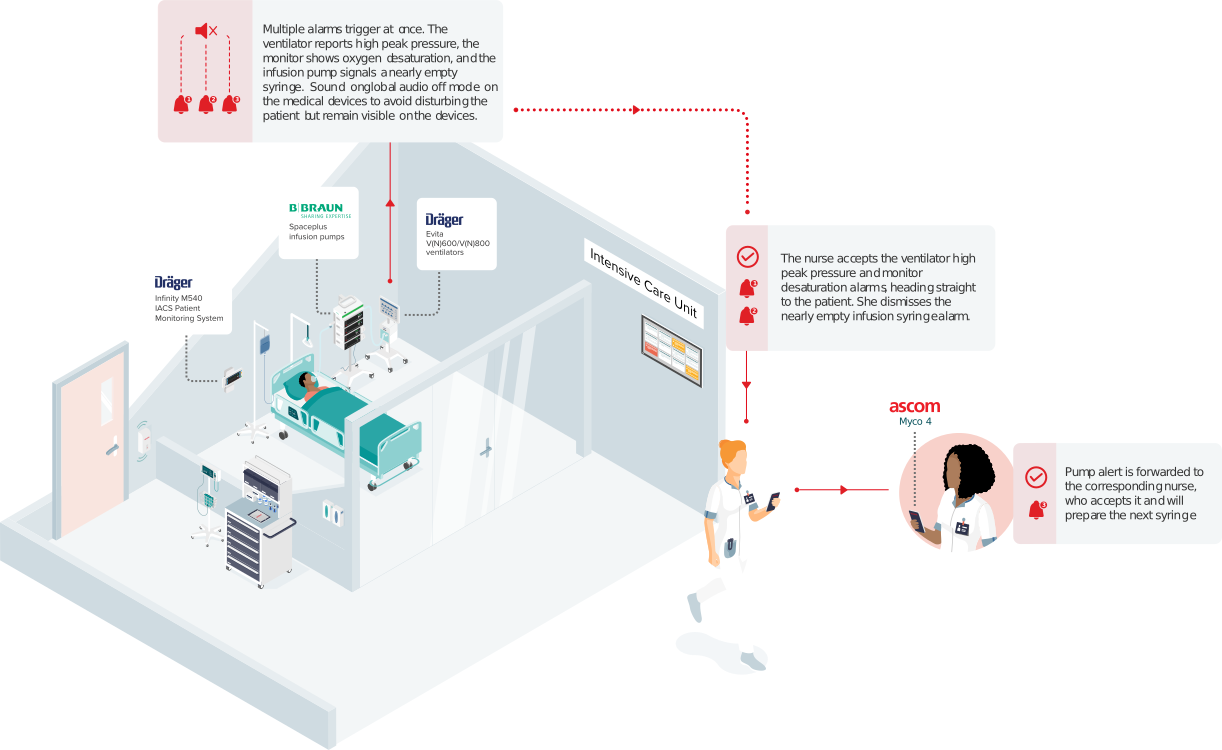
As part of the European research program SASICU (Smart and Silent ICU), Ascom plays a significant role in making intensive care units smarter and quieter. Supported by the Innovative Health Initiative (IHI), the project seeks to mitigate alarm fatigue and improve clinical decision-making through seamless medical device interoperability. Ascom collaborates with partners, including Dräger and several prominent university hospitals across Europe, conducting two studies associated with this initiative.
One study, executed jointly with Erasmus Medical Center, Dräger, and B. Braun investigates the advantages of Silent ICU based on standardized interoperable medical technologies. Ascom's Silent ICU solution is designed to allowing the silencing of bedside alarms and evaluate alarm relevance based on clinical data, thereby fostering a tranquil patient environment while ensuring clinicians remain informed of actionable alerts.
By utilizing the SDC standard, Ascom aids in establishing an open and secure ecosystem that empowers healthcare professionals in their decision-making processes and enhances patient comfort and safety.
A further project at Universitair Medisch Centrum, Utrecht, centers on evaluating alarm significance and actionability through the utilization of intelligent algorithms implemented in Ascom solution.


Acknowledgement
This project is supported by the Innovative Health Initiative Joint Undertaking (IHI JU) under grant agreement No. 101132808. The JU receives support from the European Union’s Horizon Europe research and innovation programme and COCIR, EFPIA, Vaccines Europe, EuropaBio, and MedTech Europe.
Disclaimer: Funded by the European Union, private members, and contributing partners of the IHI JU. Views and opinions expressed are those of the author(s) only and do not necessarily reflect those of the aforementioned parties. None of the aforementioned parties can be held responsible for them.
