Country selector

United Kingdom


Country Selector: United Kingdom
Reducing dependency scores is one of the biggest challenges facing care organizations today. With rising acuity, staffing pressures, and increasing regulatory scrutiny, a reactive model of care is no longer enough. To remain resilient, care providers need to move towards a more predictive, proactive approach. One that protects resident wellbeing while helping care teams work more efficiently. At Ascom, we support this shift by helping organizations build the digital foundations for predictive care.

In a recent partnership, we implemented a sensory framework designed to surface early indicators of risk across an entire resident population. Subtle patterns that were previously hard to detect are now visible in real time. Examples include increased nighttime bathroom visits, often an early indicator of urinary tract infections, and extended bed occupancy, which significantly increases the risk of pressure ulcers. By detecting these trends early, care teams can intervene sooner. The result is fewer falls, fewer complications, and ultimately lower dependency scores.
Dependency is not only driven by incidents, but by how well those incidents are understood. Historically, falls were categorised as witnessed or unwitnessed, leaving critical gaps in insight. With Ascom’s sensory optics, this changes fundamentally. Falls are now categorised as monitored or witnessed, providing valuable context around the event. This leads to faster response, better understanding of resident behaviour, and more informed care decisions.

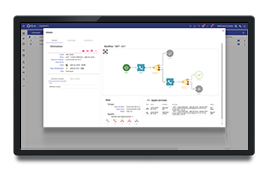
By combining Ofelia—our alarm and workflow management platform—with SmartSense dashboards, and integrating with digital care platforms such as Nourish, care organisations can move towards a truly unified, predictive ecosystem. In this future state, alarms are no longer just alerts. They become intelligent signals that support proactive care planning, reduce reactive workloads, and enable leadership teams to make informed, data-driven decisions.
Without predictive insight, dependency scores inevitably rise. This leads to increased staff time spent managing incidents, higher fall rates, avoidable hospital admissions, and growing operational pressure. By contrast, organisations that invest in these digital foundations today create safer care environments, more efficient teams, and a scalable platform for the next decade of digital transformation. If you are ready to move from reactive care to predictive insight—and actively reduce dependency across your organisation—Ascom would welcome the opportunity to support that journey.